


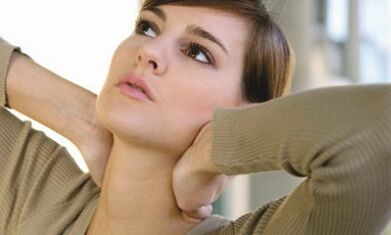
Osteochondrosis is a pathological process leading to dystrophic and structural disorders, first in the intervertebral discs, then in the vertebrae themselves, spinal nerves, muscles, ligaments, blood vessels and neighboring internal organs.
It can affect all parts of the spine: cervical, thoracic, lumbar and sacral.Cervical osteochondrosis is a very common phenomenon and is second only to lumbar osteochondrosis in terms of frequency.
Osteochondrosis of the cervical spine occurs in stages.Like any other pathology, without timely appropriate treatment, it progresses.Functional and structural changes in bone and cartilage tissues become more and more pronounced, leading to complicated forms of the disease with loss of sensitivity and limitation of movements.
Stages and diplomas
In total, there are 4 stages (degrees) of cervical osteochondrosis.At the same time, the concepts of “diploma” and “stage” are very often confused.Although they mean roughly the same thing, they are not entirely the same.The stage reflects structural abnormalities of the cervical spine, nearby organs and tissues.And by degree we mean the symptoms of osteochondrosis and the patient's complaints.With cervical osteochondrosis grade 1, clinical signs are minimal and may be completely absent.The patient complains of slight pain in the neck (cervicalgia), which intensifies when turning the head.On examination, local tension is noted in the neck muscles.
Osteochondrosis of the cervical spine of the 2nd degree is accompanied by discogenic radiculitis.As a result of further degenerative-dystrophic changes in the nucleus and fibrous capsule of the intervertebral disc, the height of the space between the cervical vertebrae decreases.As a result, the roots of the cervical spinal nerves are pinched.Patients are bothered by occasional pain, which intensifies when turning and tilting the head.The pain syndrome can extend beyond the cervical region and be accompanied by general weakness and reduced performance.
As a result of other pathological processes leading to the displacement and destruction of the intervertebral discs, herniated discs are formed in the cervical region.The pain and general feeling of weakness intensify and are accompanied by sensory and motor disturbances in the affected segment.Cervical osteochondrosis of the 3rd degree develops.
Subsequently, in cervical osteochondrosis grade 4, the destroyed intervertebral disc is replaced by fibrous connective tissue.Due to the involvement of the vertebral artery in the pathological process, pain syndrome with sensory and motor disturbances is accompanied by brain disorders - dizziness, lack of coordination and a feeling of ringing in the ears.
Etiology
Before talking about the causes or etiological factors of cervical osteochondrosis, it is necessary to clarify some anatomical and physiological characteristics of this part of the spine.
These features are:
- The neck is a mobile structure, but it borders on the relatively static thoracic spine.
- There are 7 cervical vertebrae and 8 segments.The “extra” segment appears due to the atlanto-occipital joint.
- The cervical vertebrae have anatomically different structures, which is particularly evident in the example of the first two cervical vertebrae, the atlas and the axis.
- Vital communications pass through the neck: the trachea, the esophagus and the large vessels, including the vertebral artery, which supplies blood to the brain.
Etiological factors that lead to pathological changes in the cervical spine with subsequent transition to cervical osteochondrosis of the 2nd degree are as follows:
- Sedentary lifestyle;
- Poor diet with deficiency of microelements and vitamins;
- Constant bad posture among schoolchildren, students and office workers;
- Frequent hypothermia, unfavorable microclimate at home and at work;
- Endocrine disorders;
- Low immunity;
- Heredity.
Symptoms
Symptoms of cervical osteochondrosis grade 2, in addition to pain, include tension in the neck and back muscles.Neck pain (cervicalgia) with this degree of osteochondrosis can be pinpoint or diffuse, extending beyond the neck to other anatomical areas - the back and shoulder girdle.Due to the shortening of the intervertebral spaces, the muscles and ligaments sag.The action of the muscular structure weakens and a subluxation of the cervical spine is formed, as a result of which the disc shifts to one side or another.The pain can be sharp and intense, like lumbago (cervicago) after turning the head or straightening the neck.
In addition to pain, as already mentioned, there is tension in the neck and back muscles.Due to the fact that the cervical vertebrae are not displaced from the back, but to the side, such tension is most often asymmetrical in nature and leads to poor posture.In turn, poor posture leads to further deterioration of metabolic processes in the cervical region.All conditions are created for the transition of osteochondrosis to stage 3.
In stage 2 of cervical osteochondrosis, the vertebral artery is not yet affected.However, already at this stage, in addition to pain and muscle tension, patients complain of a feeling of weakness, fatigue and weakness.Possible sleep disturbances due to pain.
Types of treatment
Treatment of cervical osteochondrosis grade 2 includes:
- Drug therapy,
- Physiotherapeutic procedures,
- Therapeutic gymnastics,
- Massages,
- Manual therapy.
Drug treatmentaims to eliminate neck pain, inflammation of the roots of the cervical segments and to normalize metabolic processes in the cervical intervertebral discs.Pain relief is achieved by taking oral painkillers.But this is the most ineffective way to eliminate pain.In this regard, intramuscular injections are more effective.In case of severe pain, you can put a special Shants collar on your neck.
Pain reliefcan be achieved by eliminating the inflammatory process in the cervical roots.In this regard, nonsteroidal anti-inflammatory drugs (NSAIDs) are used in various dosage forms - tablets, ointments, injections and compresses.In this regard, injections and ointments are very effective.Steroid hormones have a good anti-inflammatory effect.
To restore damaged cartilage, oral administration of chondroprotectors is recommended.For the same purpose, taking vitamin-mineral complexes containing vitamins B, C, E as well as zinc, iron and calcium is indicated.Although brain disorders did not occur in stage 2 of cervical osteochondrosis, the use of neuroprotectors would not be out of place.
Physiotherapeutic proceduresfor cervical osteochondrosis of any degree, they are designed to reduce pain and inflammation and improve local blood flow.For this purpose, phonophoresis, laser and magnetic resonance therapy and ultrasound treatment are used.Physiotherapeutic procedures are contraindicated during periods of exacerbation of osteochondrosis.
Massagefor osteochondrosis, it is also carried out during the interictal period.Massage procedures are performed with the patient sitting or lying on their side.At the same time, the massage therapist kneads, strokes and rubs the tense muscles with smooth movements in the direction from the back of the head to the neck.Then the muscles of the back, neck and chest are massaged.In this case, self-massage is possible using the Kuznetsov applicator.This is a needle roller with plastic tips.It is enough to place this roller up to the neck every day for half an hour to an hour, and the result will not be long in coming.
Therapeutic exercisedesigned to consolidate the effect of the above methods of treating osteochondrosis of the neck.This creates optimal loads on different muscle groups, which leads to muscle strengthening and spinal traction.Manual treatment of osteochondrosis of the neck should be carried out with great caution.Due to the high risk of cervical spine injuries, this poses a significant risk not only to health, but also to the life of the patient.
Prevention measures
Prevention of cervical osteochondrosis is aimed at eliminating the causes of this disease and preventing the transition from stage 2 to stage 3.
In this regard, the following requirements must be met:
- Active lifestyle;
- Good diet;
- Normal conditions at home and work, excluding drafts and hypothermia;
- Correct posture during “sedentary” work and study;
- Toughen up, play sports;
- Treatment of concomitant chronic diseases;
- At the first signs of osteochondrosis, consult a doctor in a timely manner.